
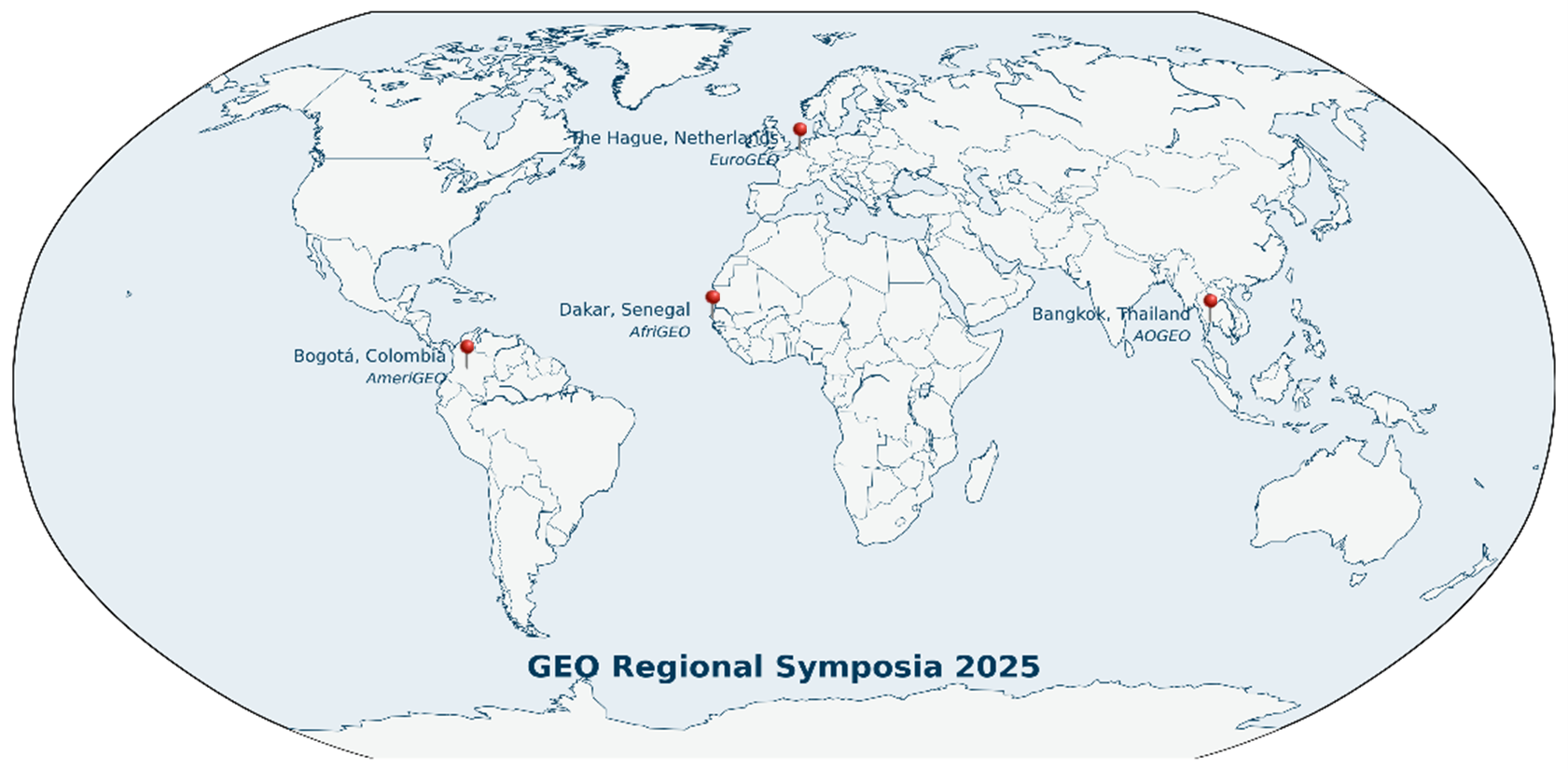
Each year, GEO’s regional organizing bodies and caucuses convene to showcase and advance innovation and shared understanding across the Earth Observation community.
As the GEO flagship for agriculture and food security, GEOGLAM embraces every opportunity to engage with the regional partners who generate, use and translate EO into decision-ready insights. The regional GEO communities—AfriGEO, AmeriGEO, AOGEO and EuroGEO—bring together amongst others, experts in agriculture, climate, land management, food security early warning, and national EO programmes. These are the people and institutions who understand local realities, maintain operational systems, and ultimately ensure that global monitoring efforts reflect regional needs.
As we head into the regional meetings, GEOGLAM’s participation is guided by a set of core questions that are central to our mission. We engage in these meetings to listen, learn, and contribute—ensuring that our work remains responsive, relevant, and impactful across regions.
Specifically, we participate in the regionals:
- To listen: Are we delivering the agricultural insights, tools and monitoring solutions that stakeholders in each region need most? What gaps and emerging challenges must GEOGLAM address?
- To strengthen regional capacity: How can we better support countries to operationalize agricultural monitoring, integrate EO into ministries and early warning systems, and align with EAV-based approaches?
- To learn and exchange: What successful regional initiatives, methods or partnerships can help us enhance GEOGLAM services and accelerate impact?
- To deepen collaboration and visibility: How can GEOGLAM align more closely with regional priorities and ensure that each region sees itself represented in the global GEOGLAM community?
The answers are not fixed. They evolve with context. But our commitment remains constant: to provide transparent, timely and trusted agricultural EO that support global, regional and national food security, grounded in strong, inclusive partnerships.
GEOGLAM’s presence at the GEO Regional Meetings strengthens our collective ability to deliver actionable agricultural intelligence—by ensuring that the global system is built with, for, and through the regions and communities most affected by food insecurity.
AmeriGEO: Launching the 2025 Regional Symposia
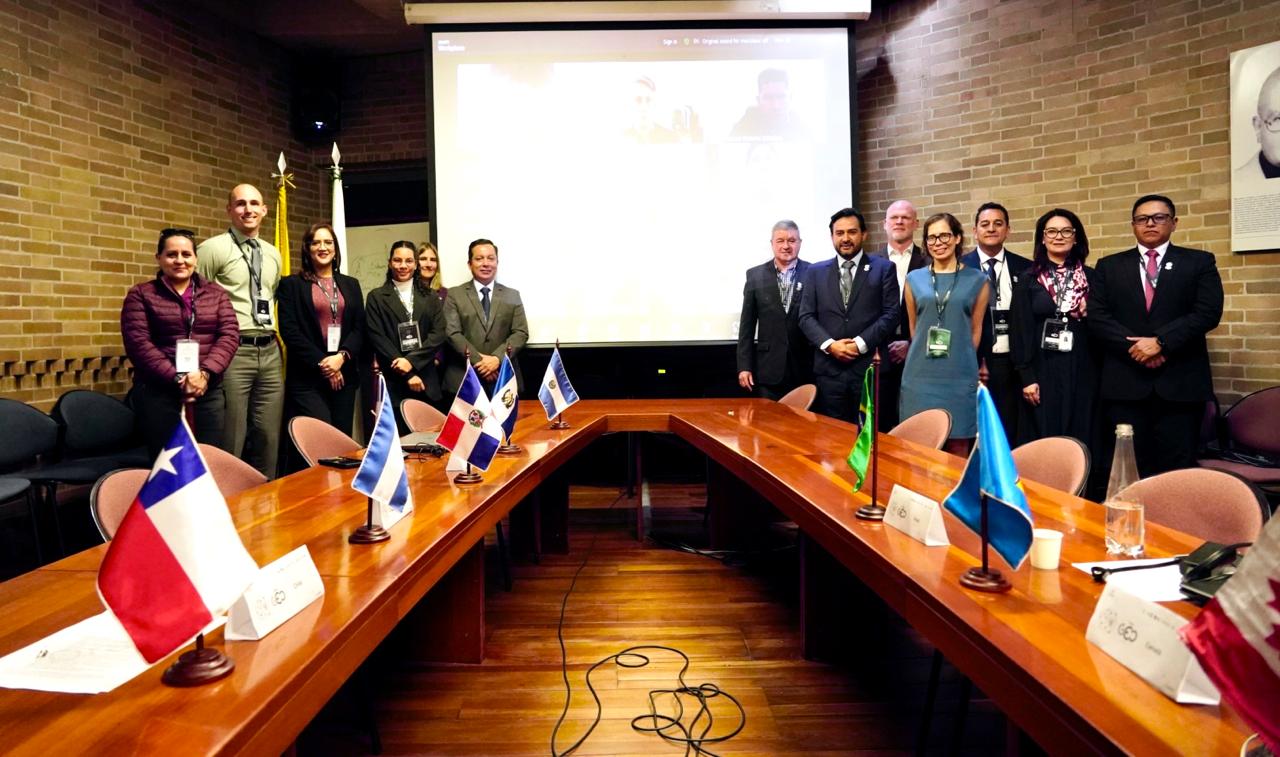
The Americas opened the 2025 GEO Regional Symposia in Bogota, Colombia, under the theme “Earth Intelligence for a Sustainable Future.” The hybrid event was co-hosted by IDEAM, IGAC and UNAL
GEOGLAM was ‘online’ represented by the Programme Director, who contributed to Plenary 4: Earth Intelligence, Agriculture, and Food Security. During this session, key elements on satellite observations are enhancing global agriculture and food systems were presented and discussed. The session was moderated by Jorge Gutiérrez – Professional in Biological Sciences, MSc in Sustainable Development, and PhD(c) in Geography. Climate Change Project Coordinator with a focus on Adaptation for FAO Colombia. Panelist in the session were Sven Gilliams – Director, GEOGLAM (Global Agricultural Monitoring Initiative) Paula Andrea Cepeda Rodríguez – General Manager, Colombian Agricultural Institute (ICA) Dora Inés Rey Martínez – Acting Director General, Rural Agricultural Planning Unit (UPRA) Heather McNair – Senior Research Scientist, Agriculture and Agri-Food Canada (AAFC) Ricardo Fabián Siachoque Bernal – Deputy Director of Agrology, Agustín Codazzi Geographic Institute (IGAC) Hiran Zani – Senior Business Development Manager for Latin America, ESRI. This session was especially useful for GEOGLAM to reconnect with a lot of national players in Latin America and very good for outreach. Overall AmeriGEO Week 2025 achieved important outcomes particularly in supporting the reactivation of National GEO mechanisms across the Americas. By integrating all platforms and connections, the event engaged over 16,400 participants—both in-person and remotely—consolidating its international reach, inclusive character, and the growing multisectoral interest in geosciences and territorial intelligence.
AfriGEO: From Data to Impact
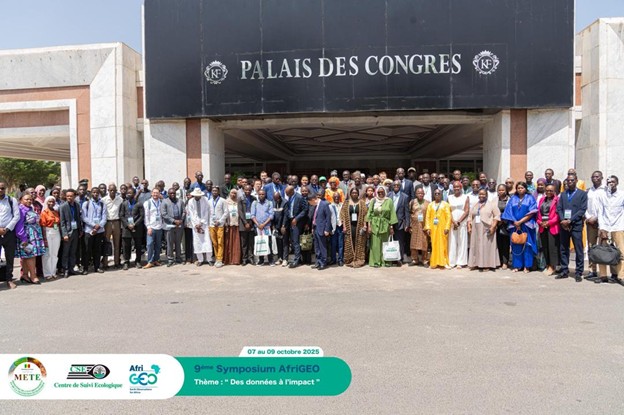
Next up was AfriGEO, held in Dakar, Senegal, under the theme “From Data to Impact: Strengthening Africa’s Geospatial Future.”
GEOGLAM partners played active roles throughout the week, beginning with the pre-symposium training co-organized and delivered by:
-
- WorldCereal / VITO Remote Sensing – Tim Ng
- CropWatch / Chinese Academy of Sciences – Hongwei Zeng
- Food and Agriculture Organization (FAO) – Mathieu Henry
- GEOGLAM Secretariat – Makabe Esther
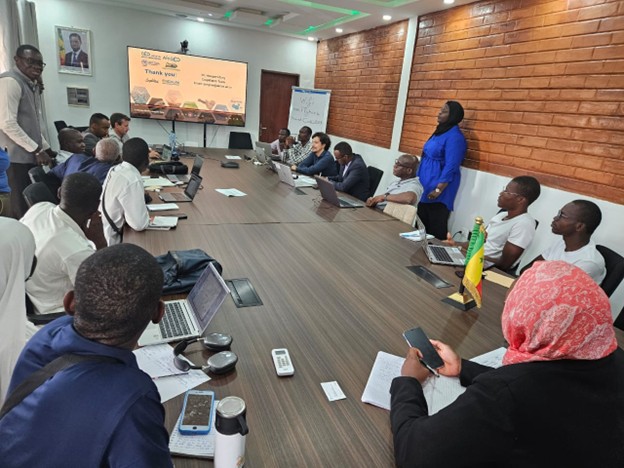
The training, titled “Integrating Satellite and In-Situ Observations for Agricultural Monitoring: Applications and Best Practices,” drew significant interest and was hailed as highly relevant for regional priorities. The interactive dialogue emphasized the importance of context-based approaches when developing standards, methodologies, and applications.
A special appreciation goes to FAO’s Mathieu Henry, who skillfully served as both trainer and translator, ensuring language never became a barrier to learning.
Additional GEOGLAM partner contributions to the AfriGEO Symposium include:
- Plenary 1: Geospatial Resources, Policy and Solutions
Zoltan Szantoi (European Space Agency) - Session 1: Continental Demo on Land Use Intensity’s Potential, Vulnerability and Resilience for Sustainable Agriculture in Africa (LUISA)
Michael Marshall, Egor Prikaziuk (ITC), Tim Ng (VITO), Pavel Vlach (GISAT), Linda Gotsmy (BOKU) - Session 4B: Strengthening Africa’s Agriculture and Livestock Ecosystems
George Chirima (South Africa Agricultural Research Council), Makabe Esther (GEOGLAM Secretariat) - Session 5B: Blue Economy and Climate Services
Kofi Asare (Ghana Space Science and Technology Institute / Ghana GEO)
EuroGEO: Combine, Coordinate, Cooperate
Hosted by the Netherlands Space Office in The Hague, EuroGEO centered its discussions around the “3 Cs”: Combine. Coordinate. Cooperate. — all in service of advancing collective Earth Intelligence.
Once again, GEOGLAM was represented by several GEOGLAM partners, including the Programme Director. On Day 1 of EuroGEO, GEOGLAM hosted a session on the European Contributions to the GEO focus area on Agriculture & Food security.
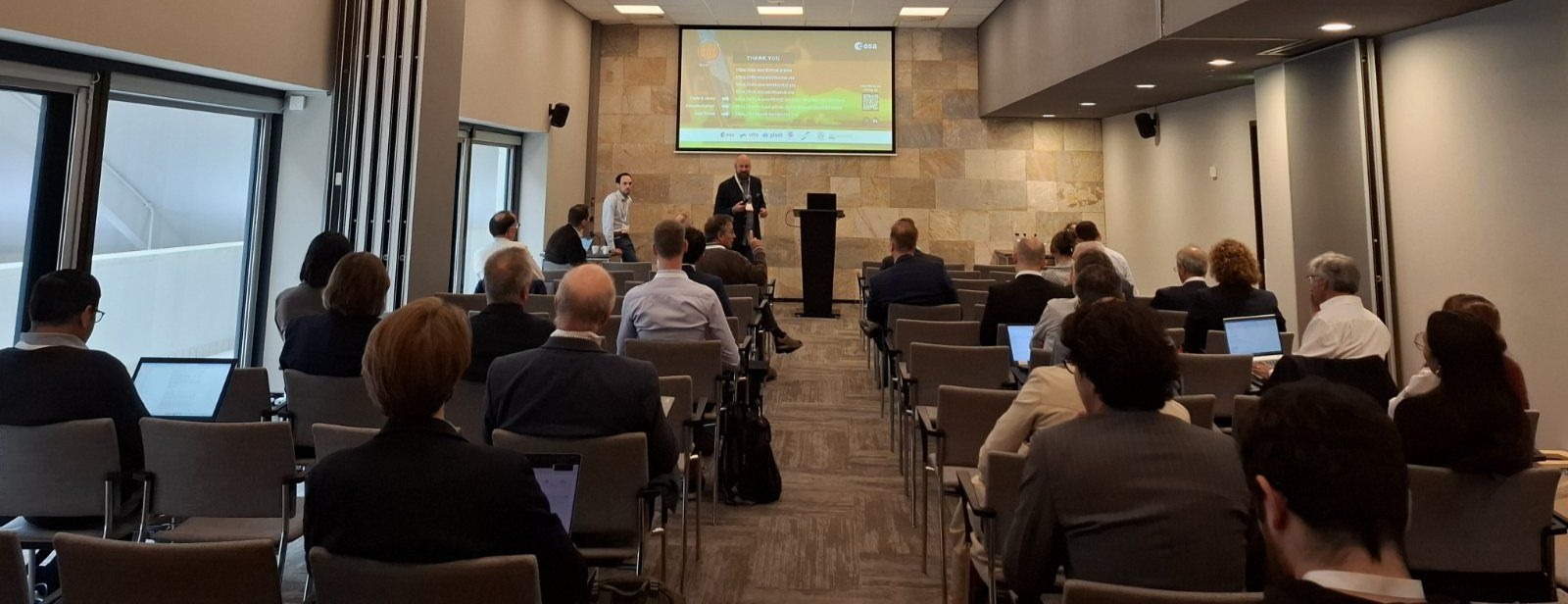
The session focused on showcasing European leadership and contributions to GEO’s global priorities—especially GEOGLAM—and on gathering practical recommendations to better align Copernicus, Horizon Europe, and national GEO activities with GEO priorities for inclusion in the EuroGEO Implementation Plan. With the EU Agriculture & Food Security Action Group lead absent, Sven Gilliams (GEOGLAM) moderated and set the policy context for GEOGLAM’s launch under the G20 in 2011. He highlighted GEOGLAM’s delivery across early warning and food security, market information, and adaptation/mitigation, including ongoing work on Essential Agricultural Variables and the monthly, consensus-based Crop Monitor reporting that covers most global production. JECAM was presented as GEOGLAM’s voluntary global network of research sites to compare methods and establish best practices, with much support coming in-kind and via national/EU R&D; GEOGLAM requirements also helped shape ESA’s LTSM mission, and the EU’s open data-sharing via Copernicus was emphasized as a major enabler.
European contributions were illustrated through concrete services: EC-JRC’s ASAP early warning system and the Copernicus4GEOGLAM service (crop type mapping and crop area estimates, including field campaigns for ground truthing, and recent extension to EU deforestation regulation validation), both providing freely downloadable data and outputs. Additional examples included FAO’s WaPOR (delivered by eLEAF, funded by the Netherlands) to monitor agricultural water productivity and support SDG 6.4, and ESA’s WorldCereal (VITO) delivering cropland/crop-type products and in-situ databases, plus tooling to generate monitoring products through CDSE/OpenEO.
Discussion then centered on (a) what further R&D and scaling are needed and (b) how to coordinate, embed, and finance future operations. A key theme was that while European R&D projects generate open algorithms and validated products, many partners lack the mandate and long-term financing to run operational services; uptake is strongest where services sit inside mandated bodies (e.g., FAO WaPOR, JRC Food Security Unit). Recommendations for EuroGEO included strengthening Europe-wide coordination of EO R&D for agriculture and food security via the Agriculture & Food Security Action Group in close partnership with GEOGLAM, and placing earlier, stronger emphasis on engagement with mandated operational organizations to accelerate uptake—potentially supported by an EU “expert pool” to reduce tunnel vision and identify synergies across institutions and initiatives.
AO GEO: Envisioning Earth Intelligence Across Boundaries
To conclude the 2025 Regionals, the Geo-Informatics and Space Technology Development Agency (GISTDA) welcomed collaborators from across the oceans for AO GEO discussions under the theme “Envisioning Earth Intelligence Across Boundaries: Accelerating Impact in the Asia-Oceania Region.”
GEOGLAM joined visionaries and practitioners in advancing the global food security agenda, represented by the AsiaRice regional network and the Programme Director.
The 17th AOGEO Symposium (Bangkok, 15–17 Oct 2025) reaffirmed the AO region’s commitment to the Post-2025 GEO Strategy “Earth Intelligence for All” and explored how EO-derived Earth Intelligence can accelerate impact across sectors. Across sessions, participants emphasized three essentials for turning EO into decisions: co-design/co-creation with users, integration of EO with AI and prediction, and capacity building (including training and youth engagement). They also highlighted the need for faster, more “fit-for-purpose” information flows—from data processing and integration through to end-user-ready outputs—and stronger cross-boundary, cross-sector collaboration as regional challenges become more complex.
For TG5 Agriculture & Food Security (Asia-RiCE), the symposium positioned rice ecosystems as a flagship pathway where Earth Intelligence can deliver both food security and climate mitigation outcomes. TG5’s achievements include validated satellite-based agro-meteorological information supporting rice growth assessment in ASEAN countries, rice mapping tools to strengthen agricultural statistics, operational capacity building (e.g., at GISTDA/ARTSA), and the ramp-up of SAFE/CH4Rice activities through selection of validation sites and initiation of in-situ data collection alongside ALOS observations. Looking ahead, TG5’s priorities are to deepen integration of EO with IoT ground data and crop models, and to advance MRV-ready approaches for low-emission rice—especially monitoring inundation regimes (e.g., AWD) to reduce methane and support credible carbon-credit methodologies that reflect country-specific realities.

The “way forward” for Asia-RiCE centers on moving from pilots to scalable, comparable regional practice: refining international guidelines for methane MRV and carbon trading, comparing EO outputs across countries and sharing methods/validation results, and expanding collaboration with both public and private sector actors to support operational uptake. TG5 also underscored the need to strengthen ties with GEOGLAM, particularly through contributions to Essential Agricultural Variables (EAVs), while mobilizing funding (donors/governments) for sustained field surveys and capacity development—so rice-focused Earth Intelligence becomes an enduring regional public good for agriculture and food security.
The 2025 Regional GEO Meetings demonstrated once again why GEOGLAM’s engagement across AfriGEO, AmeriGEO, AOGEO and EuroGEO is so essential. Each regional symposium brought forward the perspectives, innovations, and operational realities that shape agricultural monitoring on the ground—reminding us that global systems are only as strong as the regional and national communities that sustain them.
Across the four regions, GEOGLAM partners showcased impactful EO applications, strengthened technical communities through hands-on training, reconnected with national institutions, and contributed to strategic discussions on food security, climate resilience, statistical integration, methane monitoring, rangeland management and more. These dialogues reinforced a shared understanding.
The achievements of the 2025 Regionals underscore how regional GEO communities drive practical progress:
-
- They build operational capacity and technical expertise.
- They connect EO science with national early-warning and agriculture systems.
- They reveal diverse needs and priorities that must be reflected in global products.
- They help transform prototypes into scalable, locally relevant services.
As GEOGLAM looks to its next decade, this regional approach will continue to guide our work. Strengthening regional networks, supporting national monitoring systems, and co-developing solutions tailored to local food security challenges will remain central to our mission. At the same time, the insights gathered from the Regionals will inform GEOGLAM’s evolving priorities—from modernizing early warning and advancing Essential Agricultural Variables to deepening collaboration with operational agencies and global partners.
Food insecurity is far from solved—but the Regionals remind us that progress comes through shared purpose, openness, and collective action.
We extend our appreciation to all hosts, partners, contributors and participants whose engagement made the 2025 Regionals a success and look forward to continuing this work together—building stronger regional partnerships for a more resilient global system in support of food security for all.
0 Comments